Baku Old City Walking Tour. Why this tour so popular?
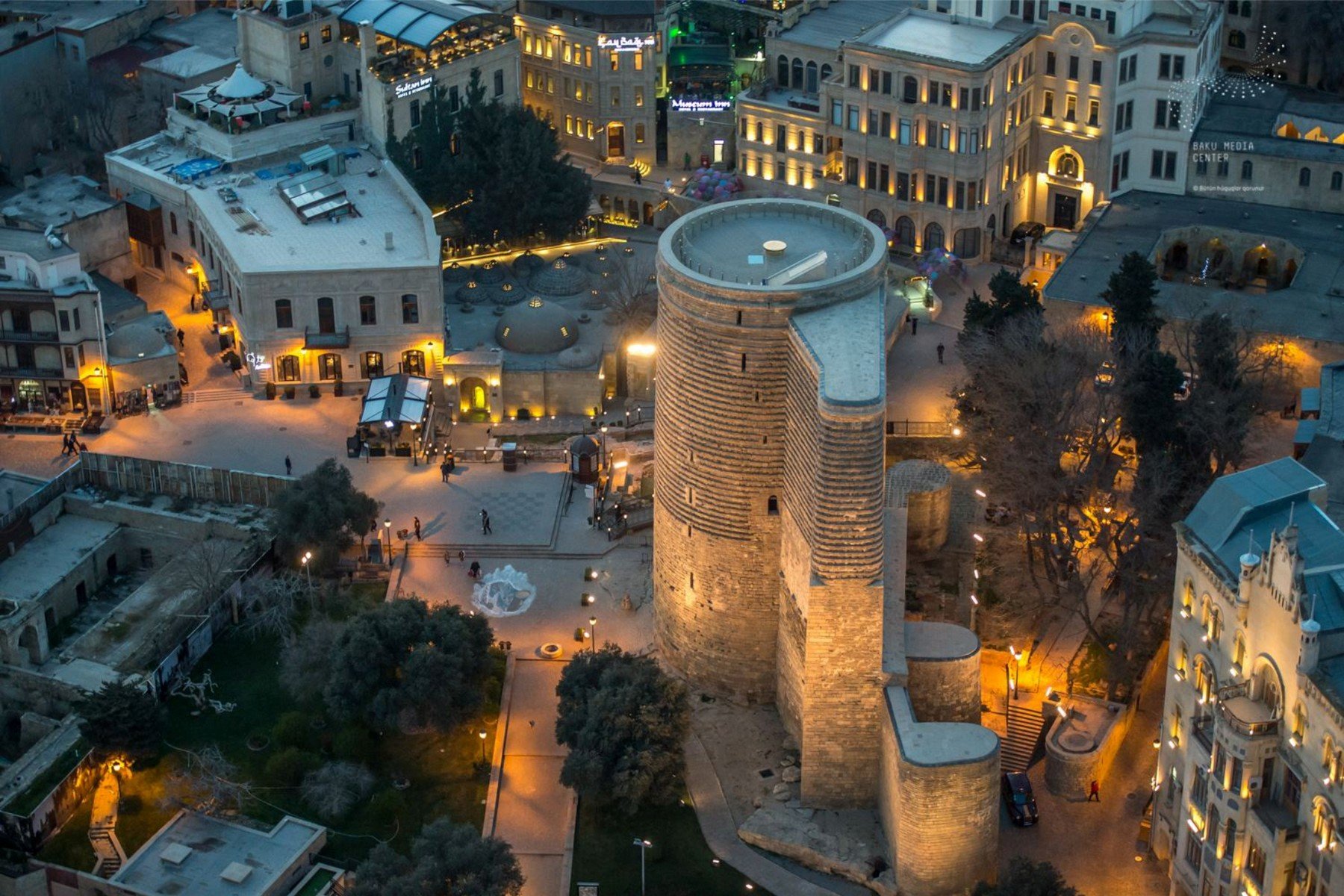
Old Town Baku, Azerbaijan
Baku Old City Walking Tour with a duration of three hours oriented on breathtaking medieval architecture and history, well mixed with shopping and tea tasting. We have various options for the Inner City Walking Tour in Baku. The duration actually depends on our traveler.
In 'Icherisheher' (eng. Inner City) two UNESCO Sites: the World Heritage Maiden Tower and Shirvanshakh's Palace Complex. If you look at the map of the Inner City you will see that both incredible buildings are located in different places. Between them there are plenty of Caravansarais and bath-houses.
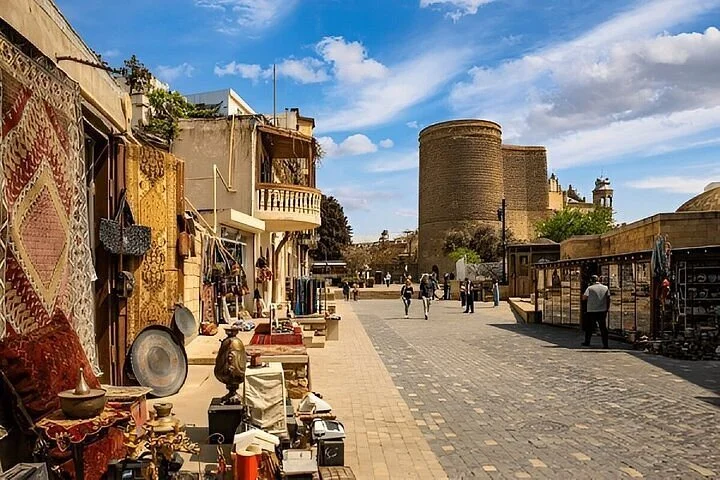
Cultural Center of Old City Baku, Azerbaijan
Today I am going to share the information about Caravansarais of Baku Icherisheher.
If you search on the Internet you can find that Baku was created in the 18th century. But this is about New European Baku. The information about the Inner City starts from the 5th and 7th centuries.
The city is situated around 92 feet below sea level. It is the world's lowest-lying national capital.
Did you know that the most ancient mention of Baku in the Book of the Dead by the Egyptian Pharaoh Minesan in 3,500 BC? The historical age of Baku is evidenced by petroglyphs dating to the Upper Paleolithic 12,000 years ago. Another important part of this is a stone carving by August Guy Octavio under the rule of the Roman Emperor Pompey, who reflected the stationing of a military in Gobustan (nowadays UNESCO World Heritage Site, 40 km to the south) for the purpose of seizing the southern Caucasus in the 1st cent. BC.
Therefore, this means:' Baku is nearly 5,500 years old.'
The Silk Roads' cities became great intellectual and cultural centers. For example, Baku, Shamakha, Gabala, Samarkand, Bursa, Aleppo, and Acre.
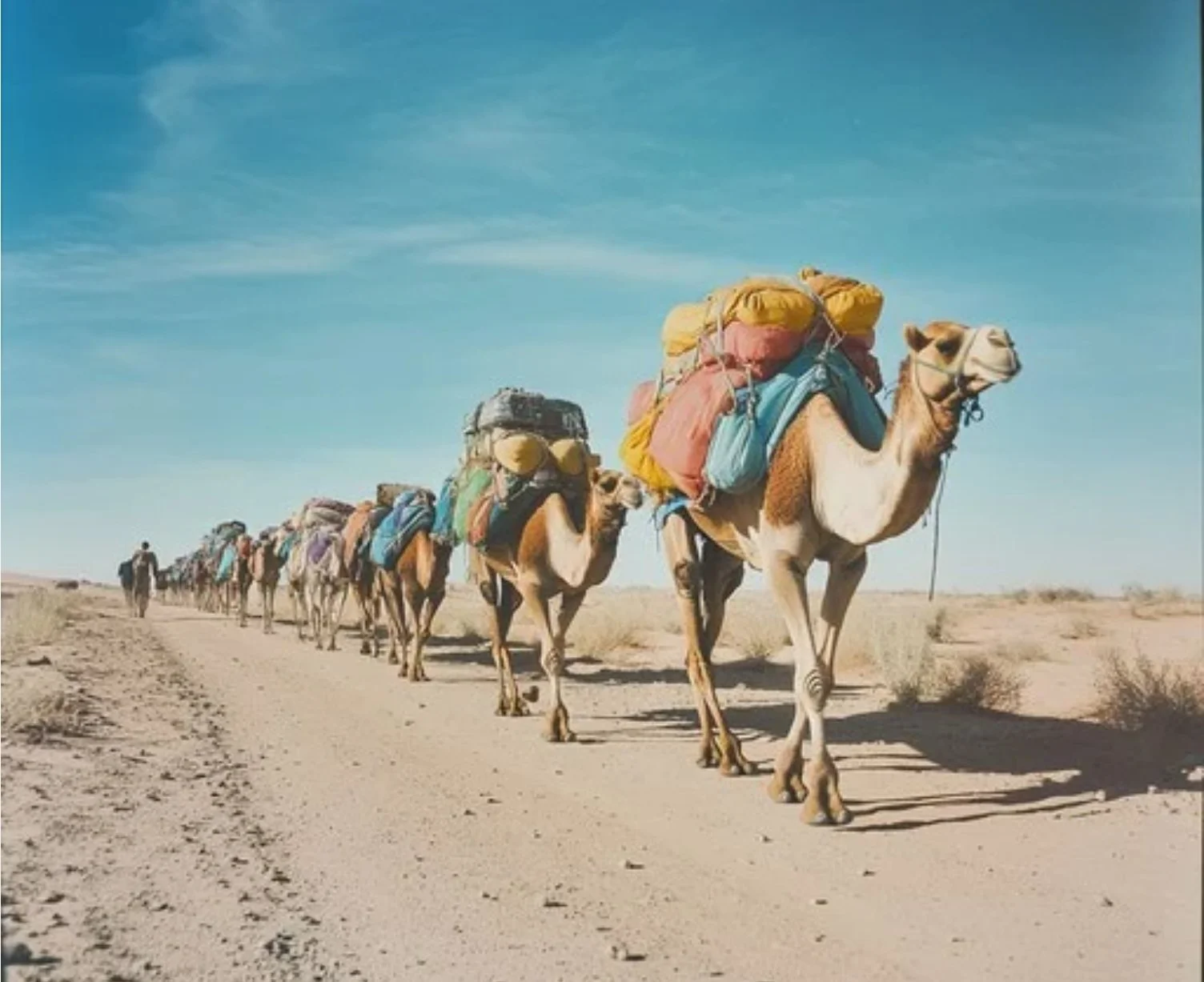
Camel Caravan
The functions of caravanserais were varied. Their primary function was to provide shelter and rest for travelers. Thus, the foundation of such a diversified modern enterprise as the hotel business is based on the principles of ancient inns of the East — both in architecture and in the organization of the hotel business. In addition to camels, a caravan could also include other pack animals, such as mules, donkeys, and horses. If a caravan consisted primarily of camels, it was called a camel caravan (deve - caravans).
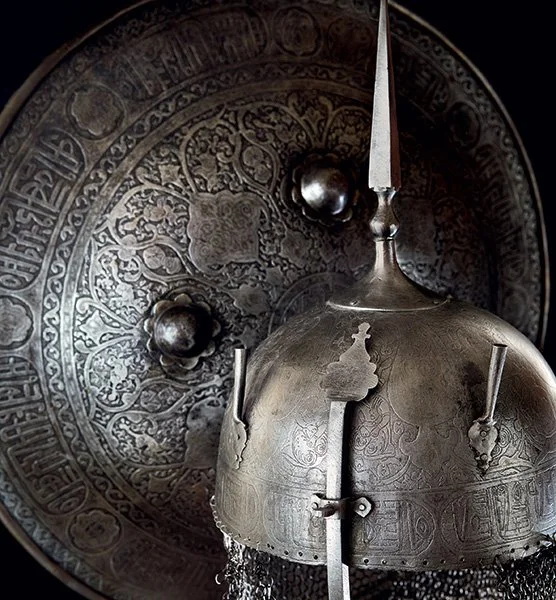
Military, medieval period, clothe
Caravans were mostly guarded.
Several security systems existed:
💂A permanent guard, personally assigned to the caravan leader—the "caravanbashi." This guard was always with him and accompanied his caravan to its final destination.
💂The guards were paid for their work in the form of a pre-agreed amount with the owner or as a percentage of the cargo owner's payment.
💂The guards were hired temporarily and exclusively by the cargo owner. Payment was made at the final destination. They were hired jointly, i.e., by agreement—the fee for guarding the caravan and cargo was split between the caravan owner and the cargo owner.
💂The guards, as a paramilitary unit with its own commander, hired themselves out (offered their services) to the caravan leader or the cargo owner. The protection of the caravan along the route (the route was always agreed upon) could be carried out separately: i.e. from the first caravanserai to the second, from the second to the third, etc. Here, the security functions were assumed by the caravanserai with their military detachments.
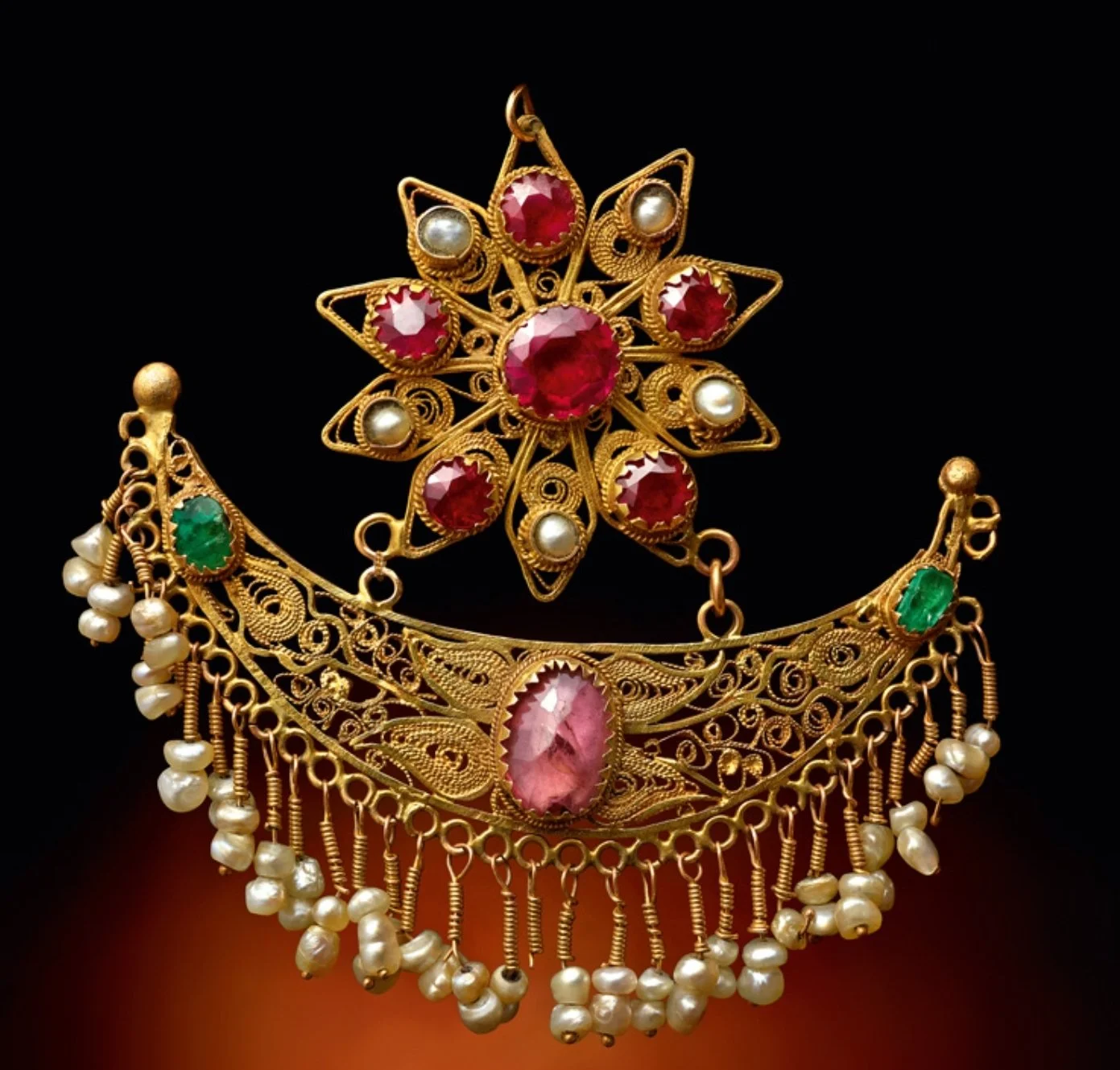
Jewelry Azerbaijan Medieval
Caravanserais of the 12th–14th centuries, built on roads outside city walls, were constructed as small defensive forts. They had a single entrance on the outside, closed by thick (up to 8 cm) wooden gates. The doors were often reinforced with wrought iron strips up to 7 mm thick.
Some doors could be completely covered with iron, copper, or bronze sheets, which only the most expensive caravanserai could afford. Caravanserai are most often simple in plan—rectangular. Complex plans are rare, but this is unusual. The height of the rooms is up to 4 meters (to the top of the vault) inside and up to 6 meters outside.
In rare cases, plans are complex, but this is uncommon. A solid six-meter wall would be impossible for attackers to storm, and given that the roof of all the rooms was at the same level, the defenders of such a small fortress could successfully withstand a significant attacking force. A parapet 70–90 cm high was built around the entire perimeter of the caravanserai walls, which also helped the defenders to take cover from enemy arrows.
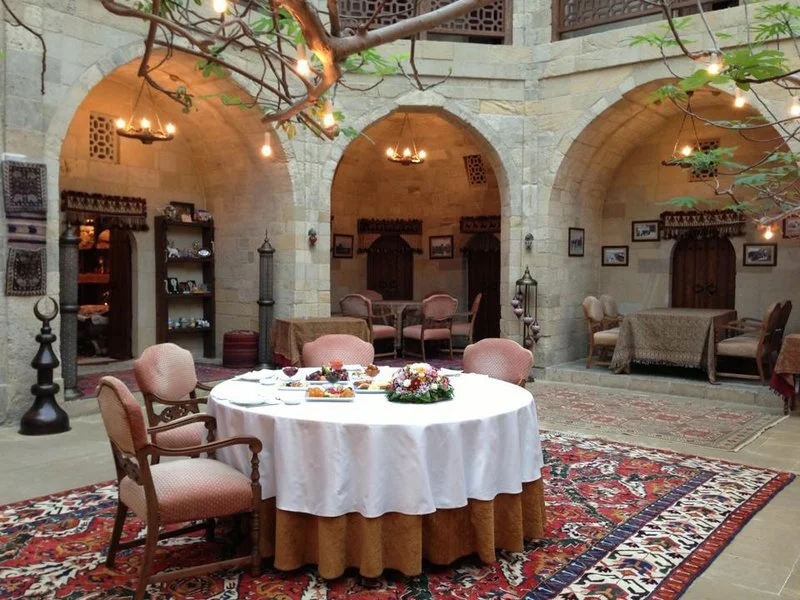
Mugam Club Caravansarai
Limestone, a local stone so beloved by Azerbaijani craftspeople, was used in the construction of caravanserais.
Limestone is easy to check by hand. It's porous, so it holds mortar well and bonds firmly. Limestone's porosity (which can vary widely, from 2 to 3 mm to 10-15 mm) is a good quality for sanitary and hygienic purposes. Air is a poor conductor of heat.
The limestone capsules contain many air cells, which retain heat well—the room stays cool, doesn't lose the warmth of the fireplace, and doesn't let in cold air from outside. Limestone doesn't absorb water because it's not a monolithic material.
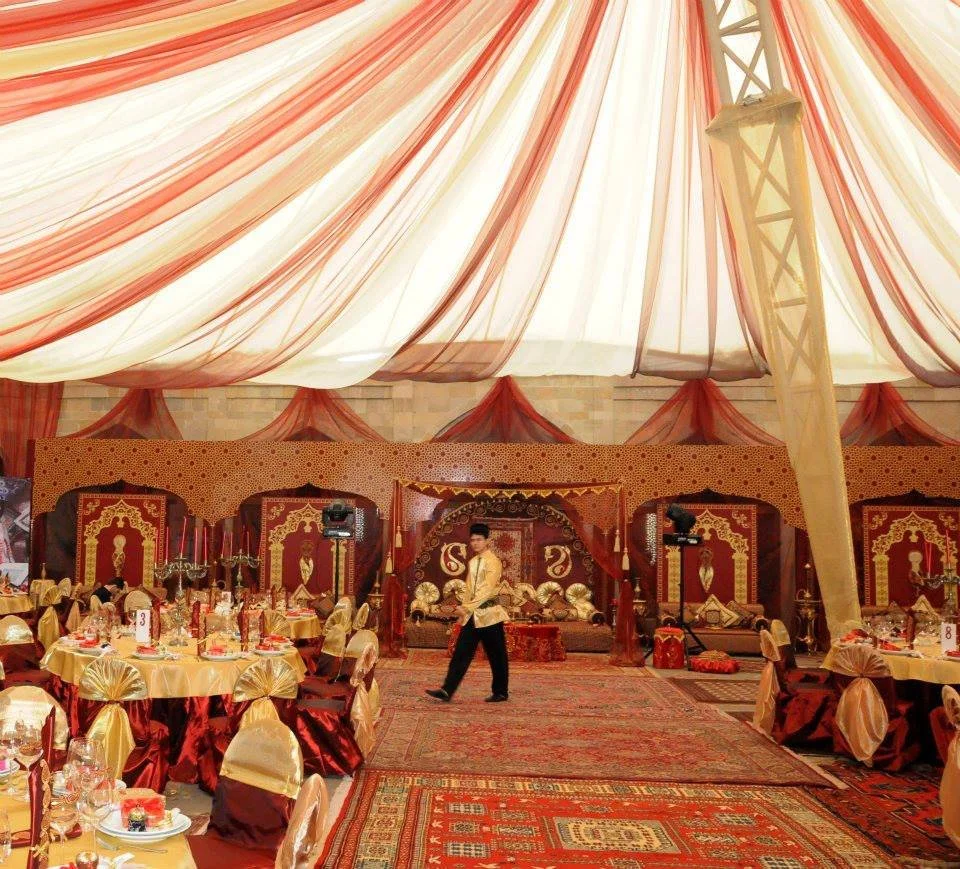
Kichik Caravansarai, 12th century, Old city Baku, Azerbaijan.
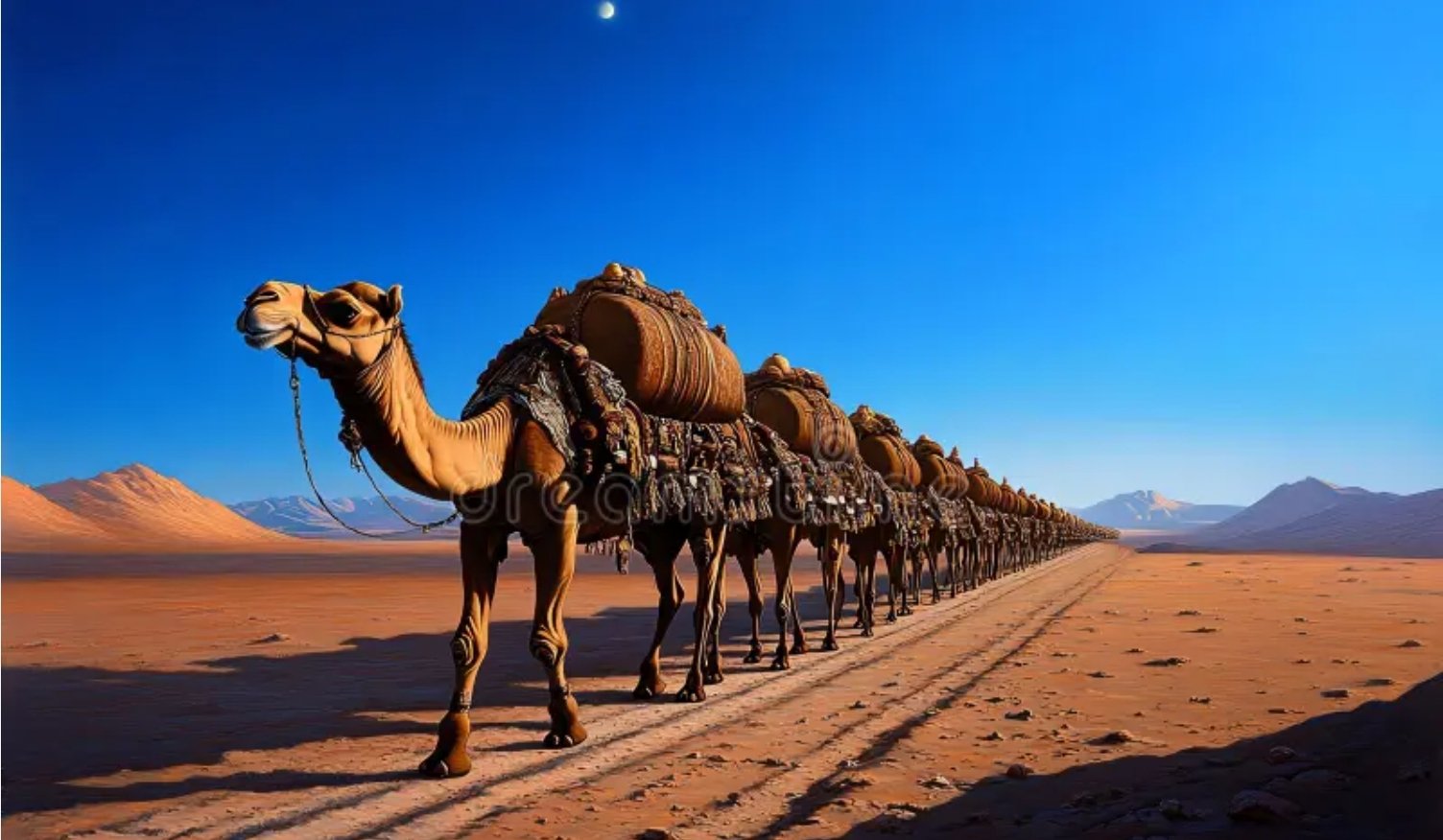
Came caravan, Silk Road
Mugam Club Caravansarai of 17th century.
Visiting this place Discover let to feel historical significance of Silk Road, Architectural school - local Shirvan Apsheron school. Two-storeyed, Interior of the caravanserai is octahedral and it consists of a yard which is surrounded by balconies (azerb:’eyvan’, where several rooms also are located.
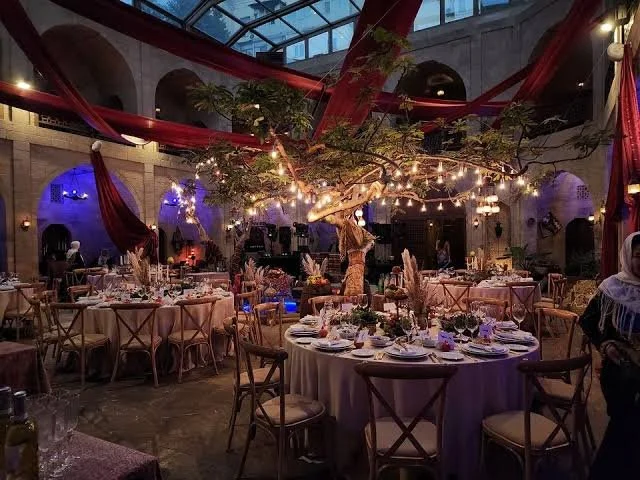
Mugam Club Caravansarai in evening. Baku, Azerbaijan
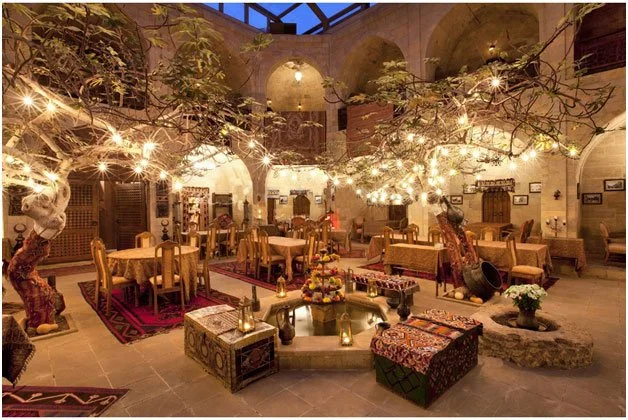
Mugam Club. The Caravansarai of 17th century. Baku Old Town, Azerbaijan
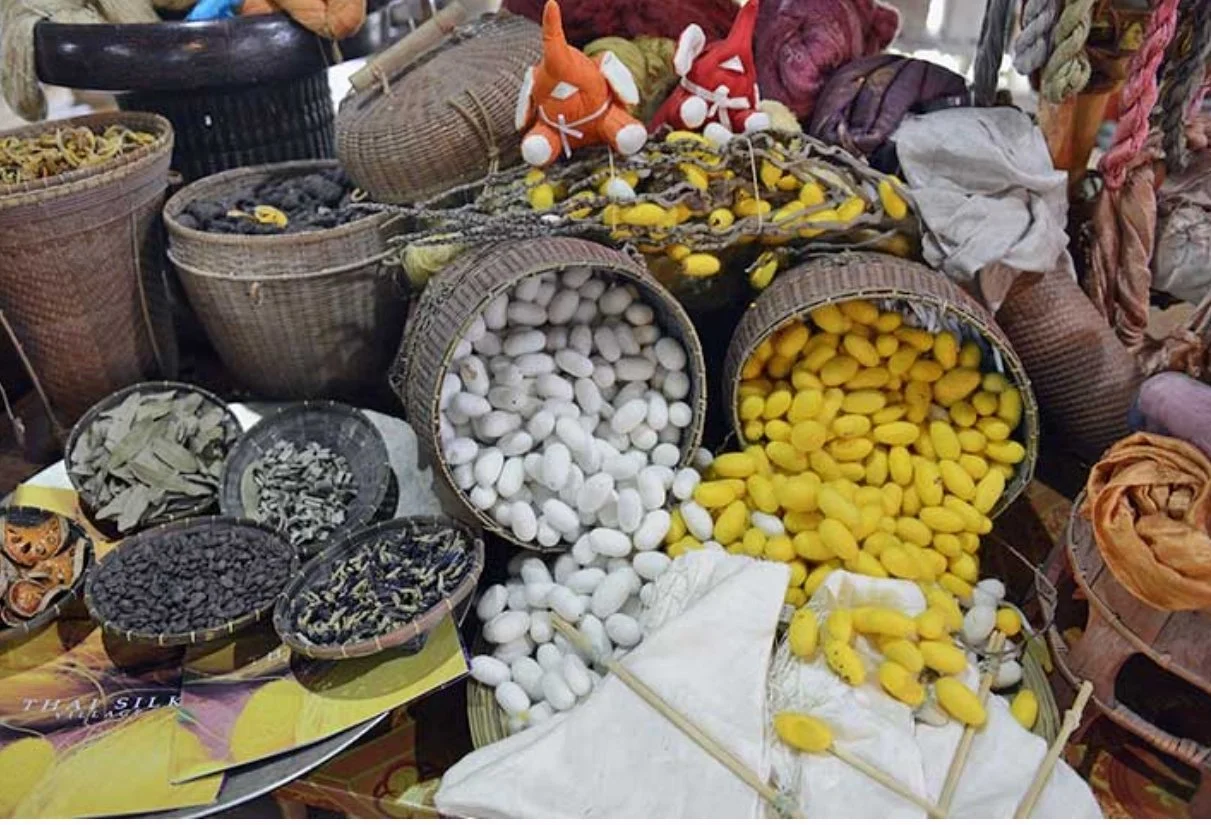
Silk and spices to sell.
