Old City Walking Tour, Baku, Azerbaijan.
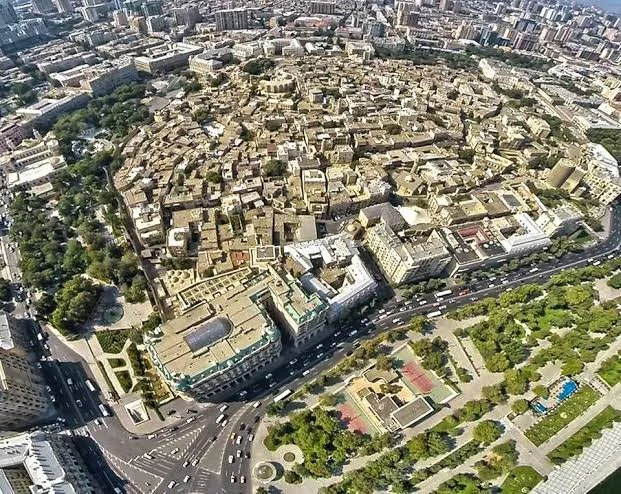
Old City Baku
Greetings from Azerbaijan,
Today I am going to share with you information about the itinerary of the Old City Baku Walking Tour.
First, before booking this tour, carefully check the weather. Baku has a very chanble weather mood with strong winds. We are going to start our walking tour from the Defense Walls of Baku Inner City.
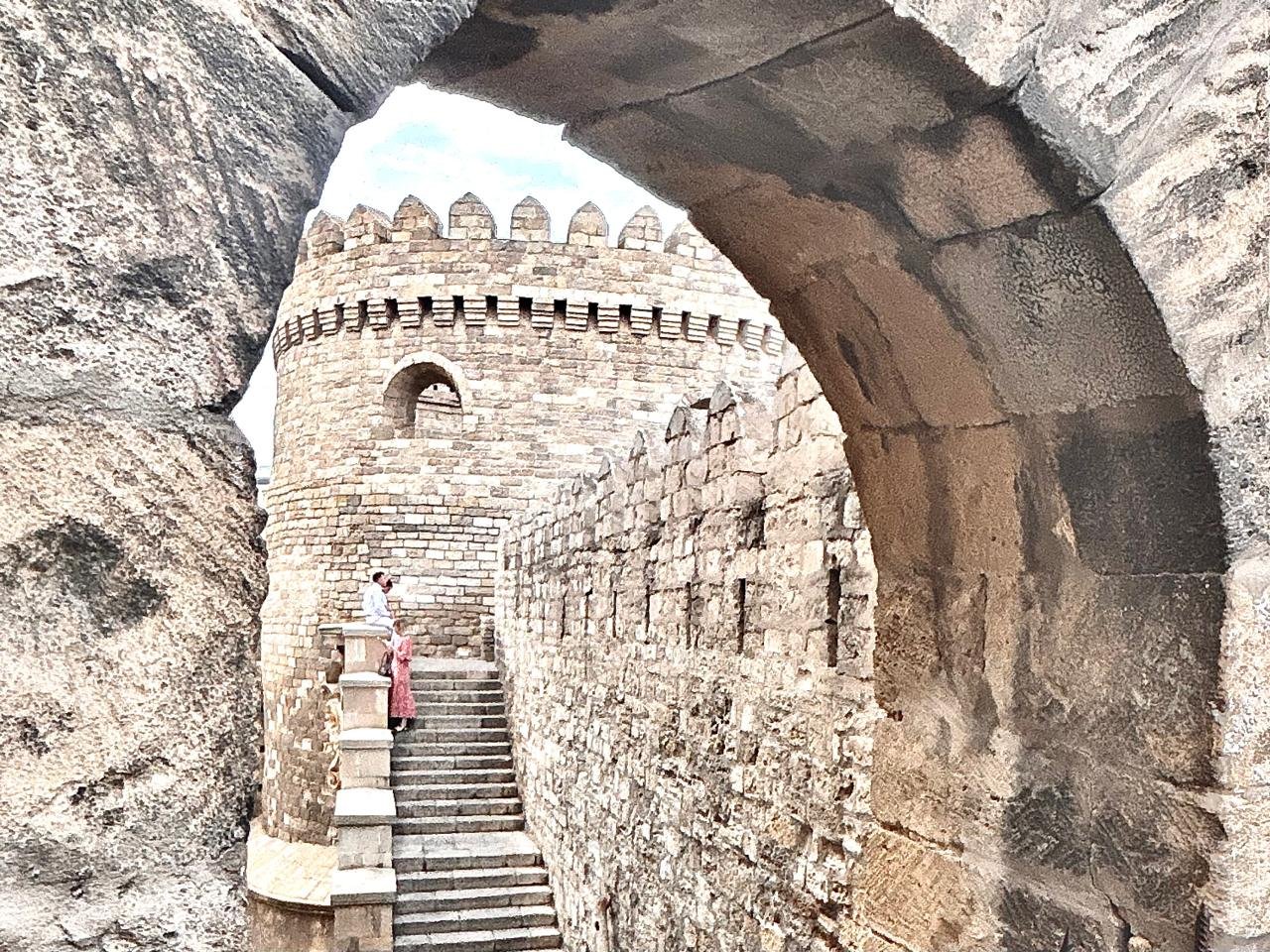
Defense Walls, Icheri Sheher, Baku, Azerbaijan
Nine hundred years ago, it was built to protect Ateshi-Bagavan from outside attacks. The city is located on the Silk Road and was rich enough. Every day it was opening the gates for many travelers from all over the world, especially India, Uzbekistan, North Countries. Each trader who was trading here had to pay a fee to trade, to stay and to get a security guard. So the reputation of the city had to be very strong. If traders were attacked, it would be bad not only for them but also for the budget of the city.
Traders would warn others to not travel through Ateshi-Bagavan, and the closest destinations as Bukhara or Samarkand would earn from this lost. To this not happen, in the 12th century, the King of Shirvan (previous name of Azerbaijan) decides to build huge walls to protect the city and everyone who lives inside. For that period of time, it was quite a serious defense structure. Before we go further, I would like to share one interesting tradition in Azerbaijan.
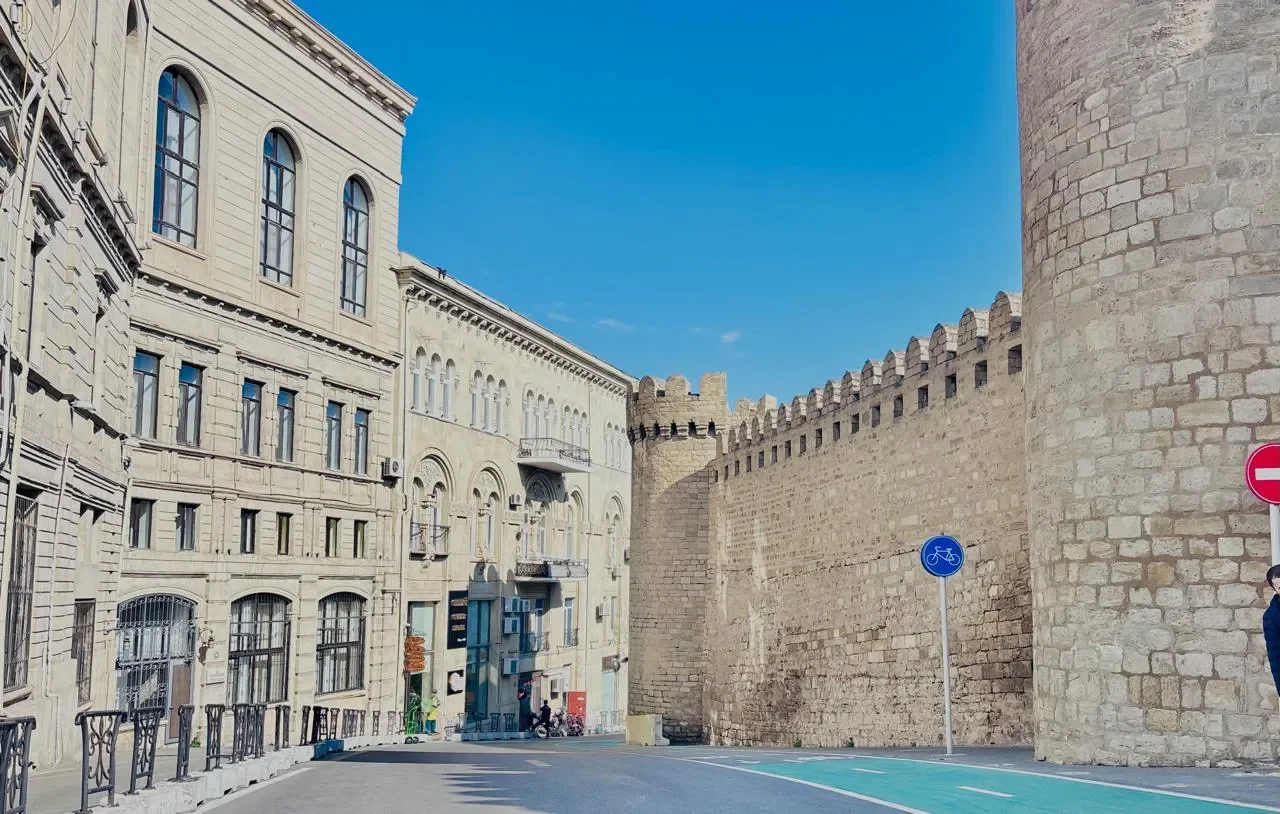
Defense Walls of Icheri Sheher, Azerbaijan
If any person has become a famous for anything, such as music, poetry, politics, architecture, they were changing their last name to the name of the region, city or village from where they were coming from. Therefore, Shirvanshakh (the king of Azerbaijan) took the name of middle lands in the country. This city under the name Shirvan is still located in the country.
Imagine the flower. It opens early in the morning and closes in the evening. Ateshi-Bagavan had three lines of defensive walls. Between them, water channels connected to the Caspian Sea. So, if anyone tries to attack the city, they should know how to swim like a fish, jump as a horse and fly like a bird.
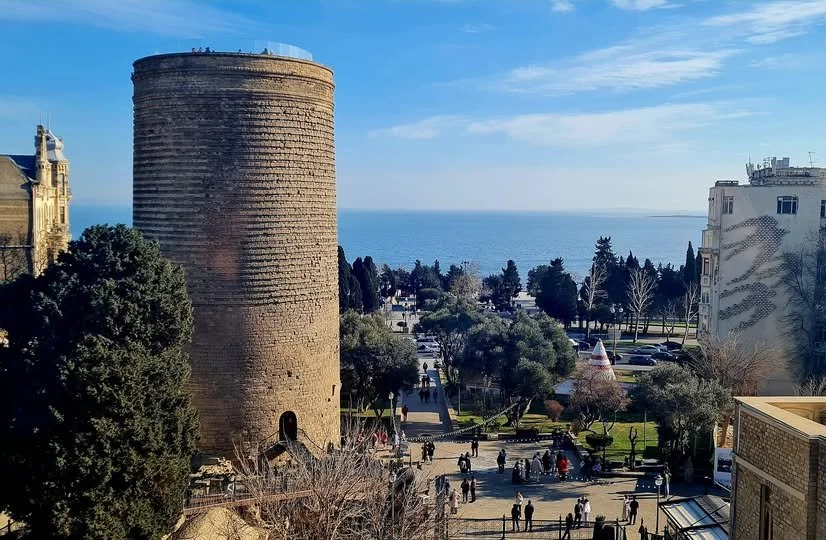
World Heritage Maiden Tower
Nowadays, from this great defensive architecture, we have only the last inner line of 500 metres long around the Old City. From the main gates we enter inside. First, what we see is quite a big square. From the left side of the underground Bathhouse, from the right side Caravansarai. The only caravansaray that has retained its functionality as a hotel. Other Caravansarai are in use as restaurants. Shah Palace 4* hotel from the late 16th century.
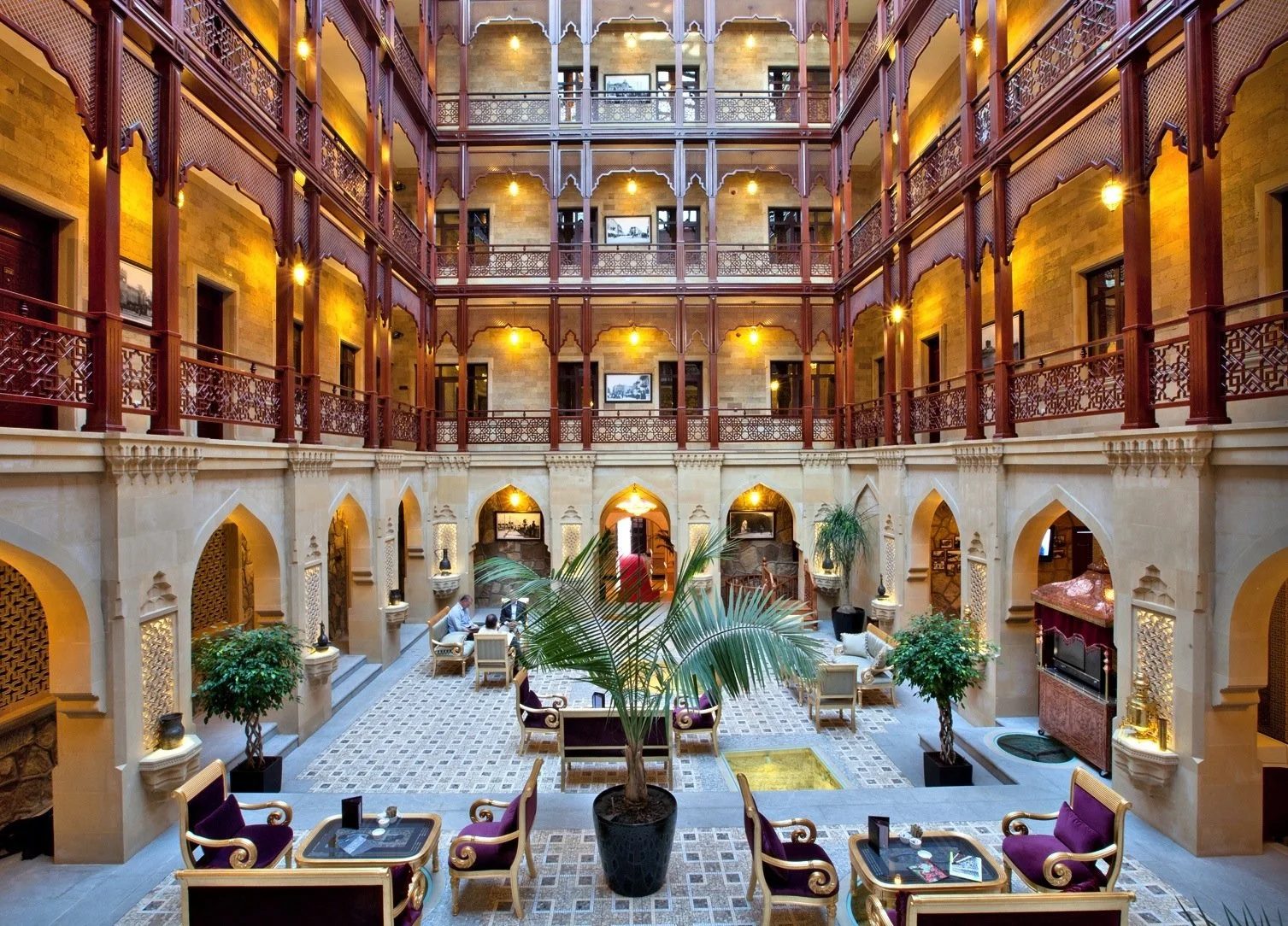
Shah Palace 4 * Baku, Azerbaijan
Hygiene was very important in the city. When traders were arriving in the city, the first thing they had to do was bath. The people of the city were checking each trader for sickness, and not only them but their animals also. After the bathhouse, the trader was going to Caravansarai. Some of them were staying in the city for a short visit, some for a long time.
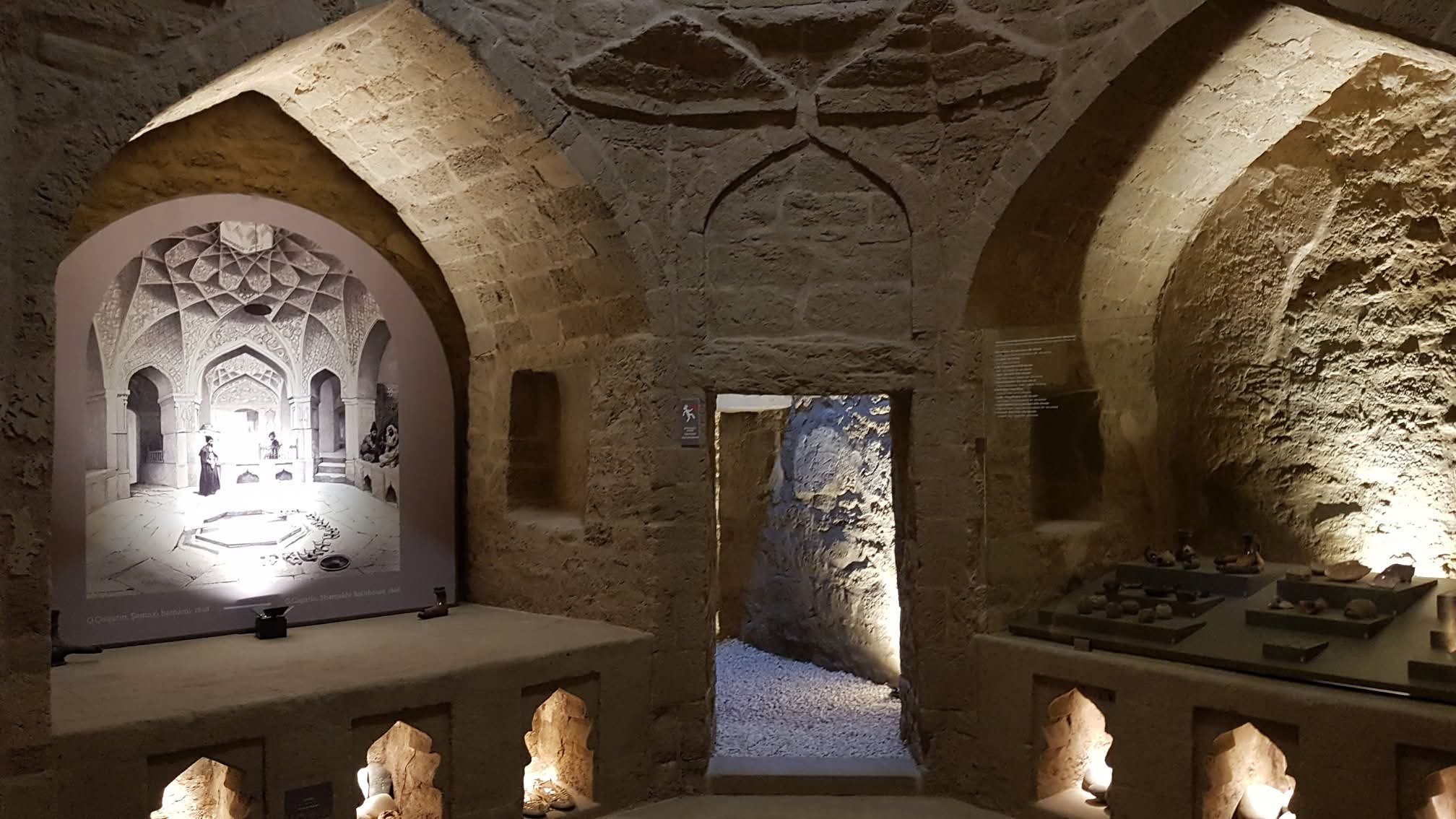
Underground Azerbaijani hamam, Old Town, Baku, Azerbaijan
The next point is House with a Chain. The Chained House ("Zencirli Muelk") in Baku is a historic early-20th-century building located in the Old City (Icherisheher) near the Gosha Gala Gates. Originally owned by merchant Haji Mammad Huseyn Mammadov, it is known for its unique, triangular architecture—often called a "Flatiron" building—and serves as a prominent landmark. If we look closely, we will see that the two main streets of the city, “Boyuk Gala” and “Gulla”, originate from here. According to archival materials, we can say that there were once statues on the top and sides of this building. In 1928, this house was purchased by the merchants Malikov brothers. Two years later, Baku city customs confiscated this house for smuggling and gave it to the Baku Sewing Factory. Until recently, this building was the office of the oil companies “BP” and “STATOIL”. Currently, the Ethnography and Archeology museum is located here.
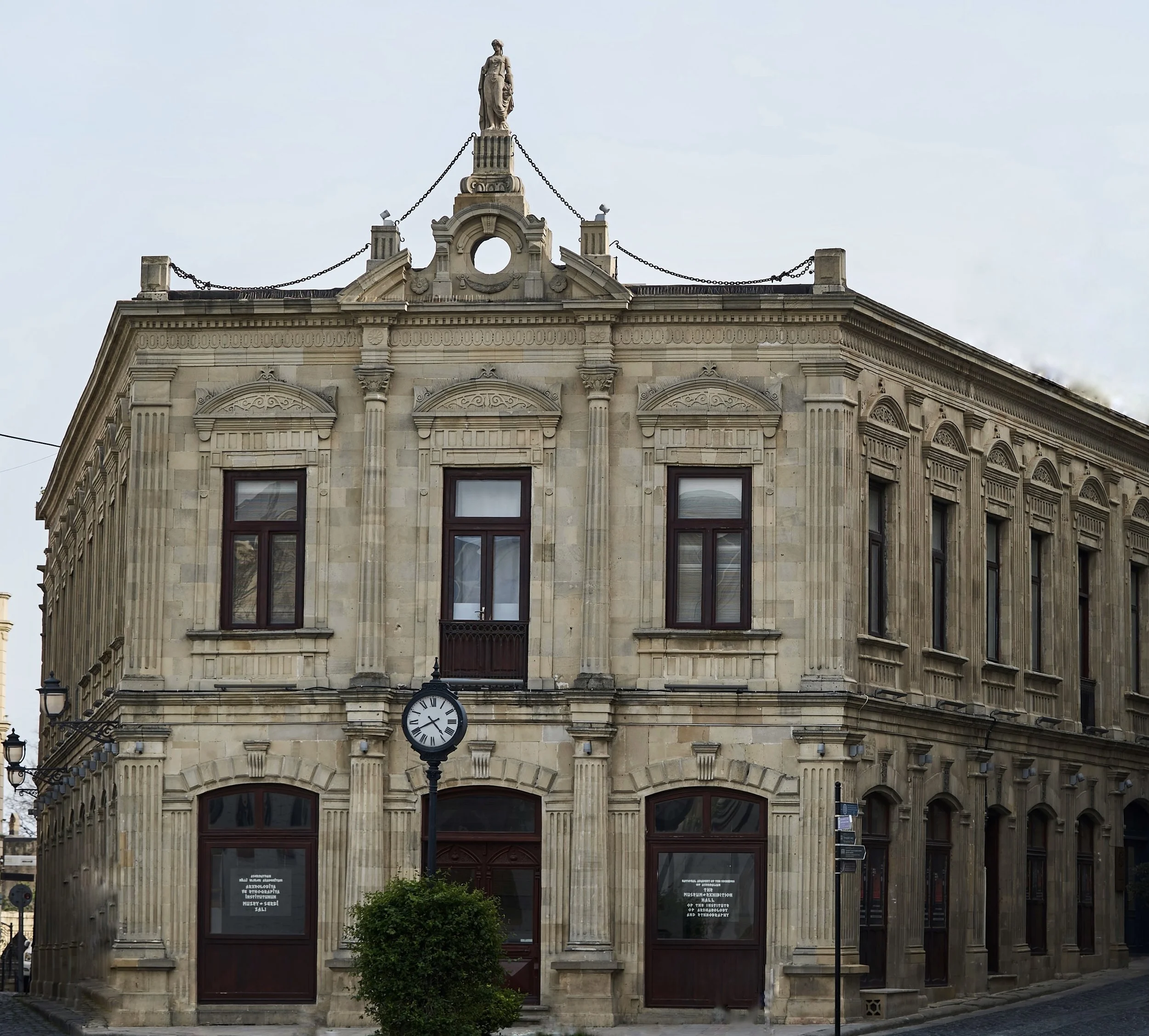
House with a Chain. Baku Old City, Azerbaijan
Find yourself in a 19th century architectural portal — street alongside Bukhara and Multani Caravansarai. If we turn back to the late 15th-17th centuries, when the name of the country was Shirvan (name of middle lands in Azerbaijan, city of Shirvan), there was a strong trade relationship between India and Shirvan. Therefore, some traders were already building their own Caravansarai in the Old City.
These two Caravansarai were built much earlier than Shah Palace. Promised to be open after restoration soon.
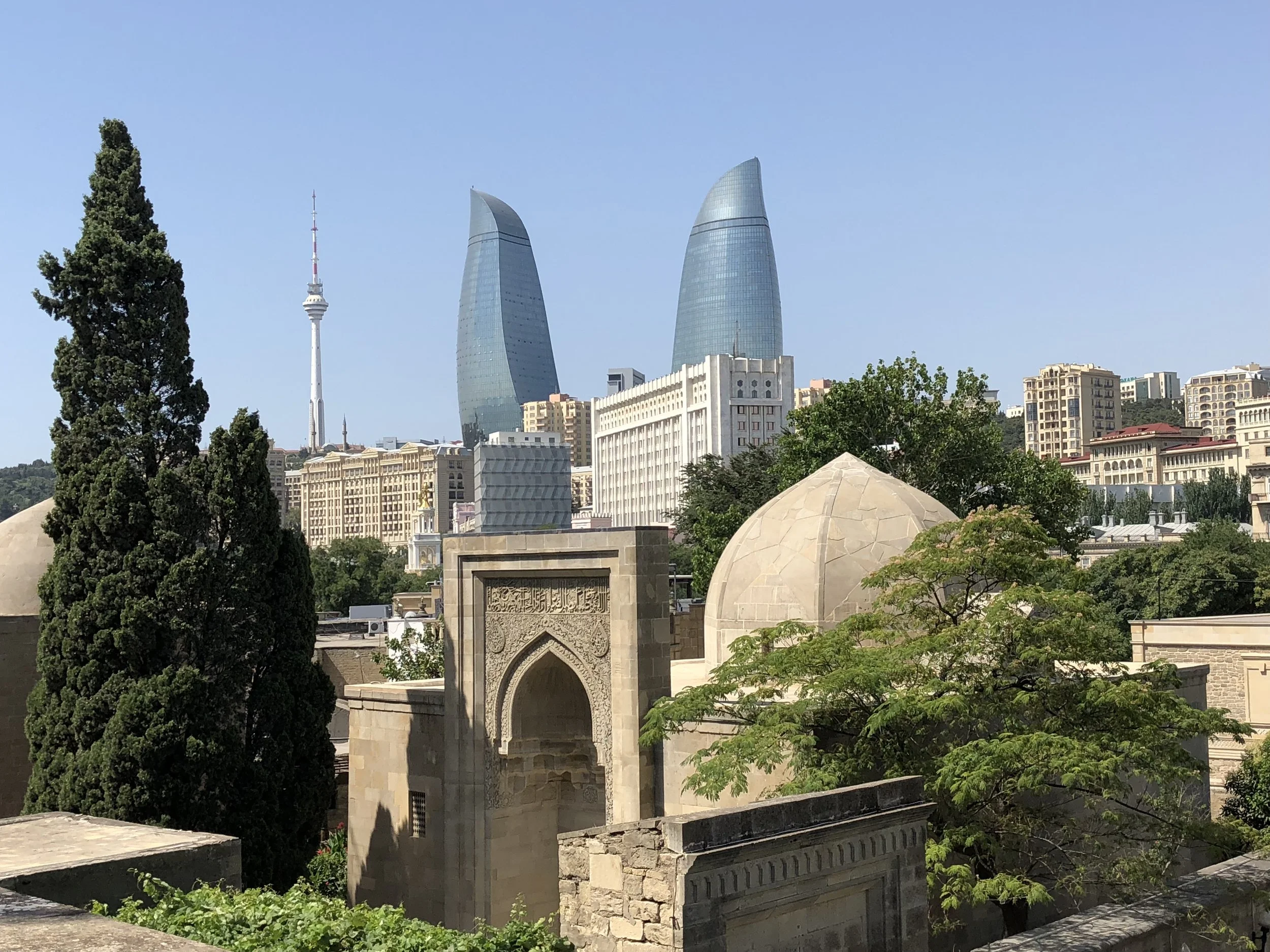
Panoramic view from Shirvanshakh's Uncompleted Palace UNESCO Site
